
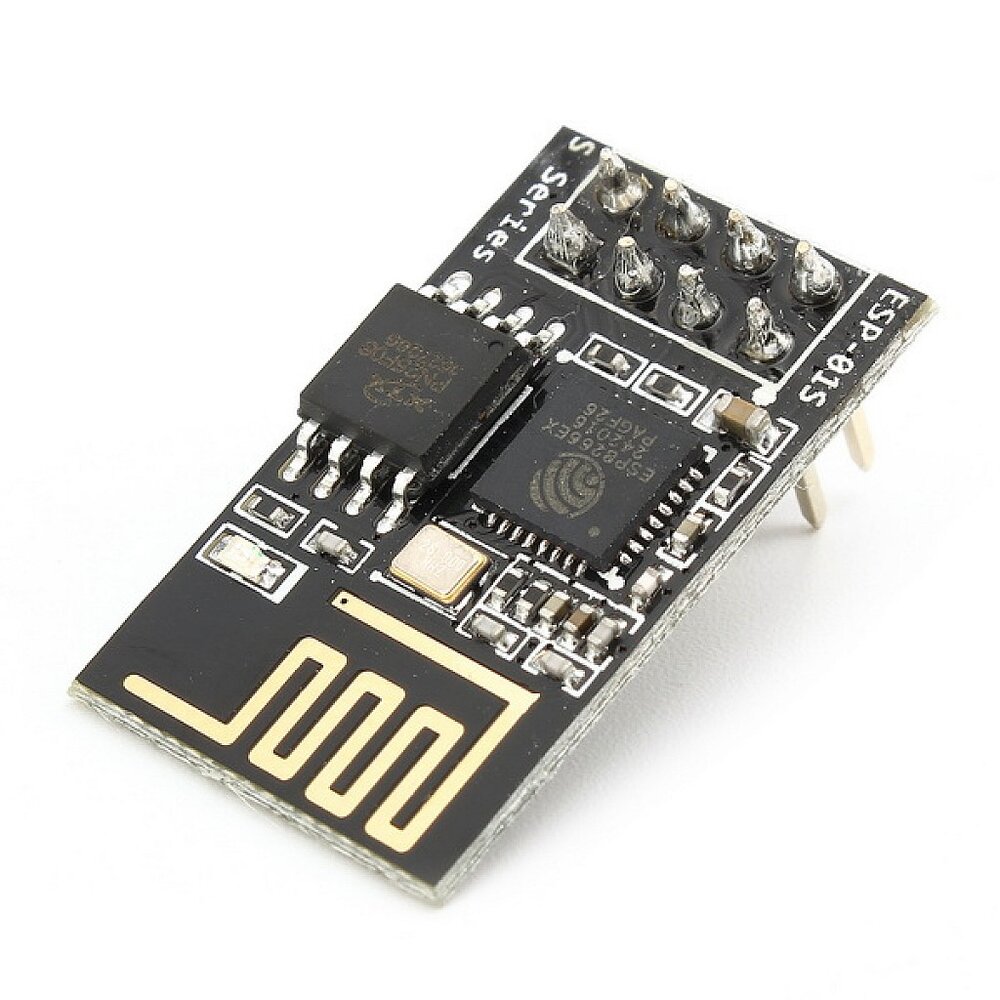
ESP8266-01S Serial WiFi Wireless Module is a highly integrated, self-contained system-on-a-chip (SoC) designed to add standalone Wi-Fi connectivity to modern IoT devices. This compact transceiver integrates a 32-bit Tensilica L106 processor alongside a complete TCP/IP networking stack to offload intensive communication tasks from your host microcontroller. Furthermore, this updated “S” revision features an upgraded 1MB Flash memory and optimized PCB routing with built-in pull-up resistors on key pins. Consequently, you can execute code directly on the module or control it externally using simple AT commands. Therefore, engineers select this low-power unit to implement wireless telemetry in tightly constrained spaces where cost and reliability remain paramount.
Key Features:
- Upgraded Flash Capacity: Houses 1MB (8Mbit) of high-speed SPI flash to accommodate larger user firmware, over-the-air (OTA) updates, and lightweight web servers.
- Improved Circuit Reliability: Integrates onboard pull-up resistors on the CH_PD (EN) and RST lines to ensure stable boot conditions without requiring external circuitry.
- Dual Operating Modes: Supports both standalone MCU operation via the Arduino IDE or SDK and slave peripheral operation using standard AT commands.
- Complete Protocol Support: Implements comprehensive 802.11b/g/n standards with integrated WEP, WPA, and WPA2 security protocols for robust network integrity.
- Ultra-Low Power States: Features advanced power-saving architectures, including deep-sleep modes drawing ≤ 20 μA, which maximize battery lifespan in field deployments.
Technical Specifications:
- Core Processor: Tensilica L106 32-bit RISC processor running at 80 MHz (overclockable to 160 MHz)
- Operating Voltage: 3.0 V to 3.6 V DC (3.3 V nominal)
- Operating Current: Average active current ≈ 80 mA; Peak current ≈ 170 mA during transmit bursts
- Flash Memory: 1 MB (8 Mbit) SPI Flash
- Wi-Fi Standards: IEEE 802.11 b/g/n
- Frequency Range: 2.4 GHz to 2.4835 GHz ISM band
- RF Output Power: ≈ +19.5 dBm in 802.11b mode
- Receiver Sensitivity: ≈ -91 dBm (802.11b, 11 Mbps)
- Supported Protocols: IPv4, TCP, UDP, HTTP, FTP, MQTT
Mechanical Specifications:
- Header Pitch: 2.54 mm standard pitch 2×4 male pin header
- Antenna Type: Onboard inverted-F PCB trace antenna
- PCB Finish: High-density dual-layer black solder mask
- Mounting Style: Through-hole connector insertion or socket mounting
- Operating Temperature: -40 °C to +85 °C
Dimensions:
- Module Length: ≈ 24.8 mm
- Module Width: ≈ 14.3 mm
- Module Height: ≈ 11.5 mm (including pin headers)
- Net Weight: ≈ 1.6 g
Pinout and Wiring:
- 3V3: Regulated 3.3V DC power supply input (never connect directly to 5V power rails).
- GND: Ground reference connection for system commonality.
- TXD: UART serial output; transmits serial data to the host MCU or USB-UART programmer at 3.3V logic levels.
- RXD: UART serial input; receives serial instructions from the host. However, you must use a resistor divider or level shifter when interfacing with 5V logic microcontrollers.
- GPIO0: General-purpose input/output pin. Ground this pin during boot to enter UART flashing mode, or leave it floating high for normal boot execution.
- GPIO2: General-purpose input/output pin; serves as boot strapping pin and secondary serial TX during debug.
- CH_PD (EN): Chip enable pin. The 01S module pulls this pin high internally to activate the core processor.
- RST: Active-low hardware reset pin. Pull this line to ground momentarily to reset the microcontroller.
Datasheet Reference:
Commonly Used in:
- Arduino Projects: Supplementing traditional Uno and Mega boards with network communication capabilities via serial UART.
- Smart Relays: Driving 5V relay shields to build compact, wirelessly triggered wall switches and socket adapters.
- Sensor Nodes: Housing standalone firmware to read DHT11, DS18B20, or I2C sensors and broadcast environmental metrics over local networks.
Applications:
- Home Automation: Integrating smart appliances into ecosystems like Home Assistant, openHAB, and MQTT brokers.
- Remote Data Logging: Transmitting sensor data periodically to cloud services such as ThingSpeak and Adafruit IO.
- Industrial Monitoring: Bridging serial legacy PLCs and instruments to local supervisory SCADA systems wirelessly.
Equivalent Models:
- ESP8266-01: The predecessor module which features a smaller 512KB flash chip and lacks internal pull-up resistors on the reset and enable lines.
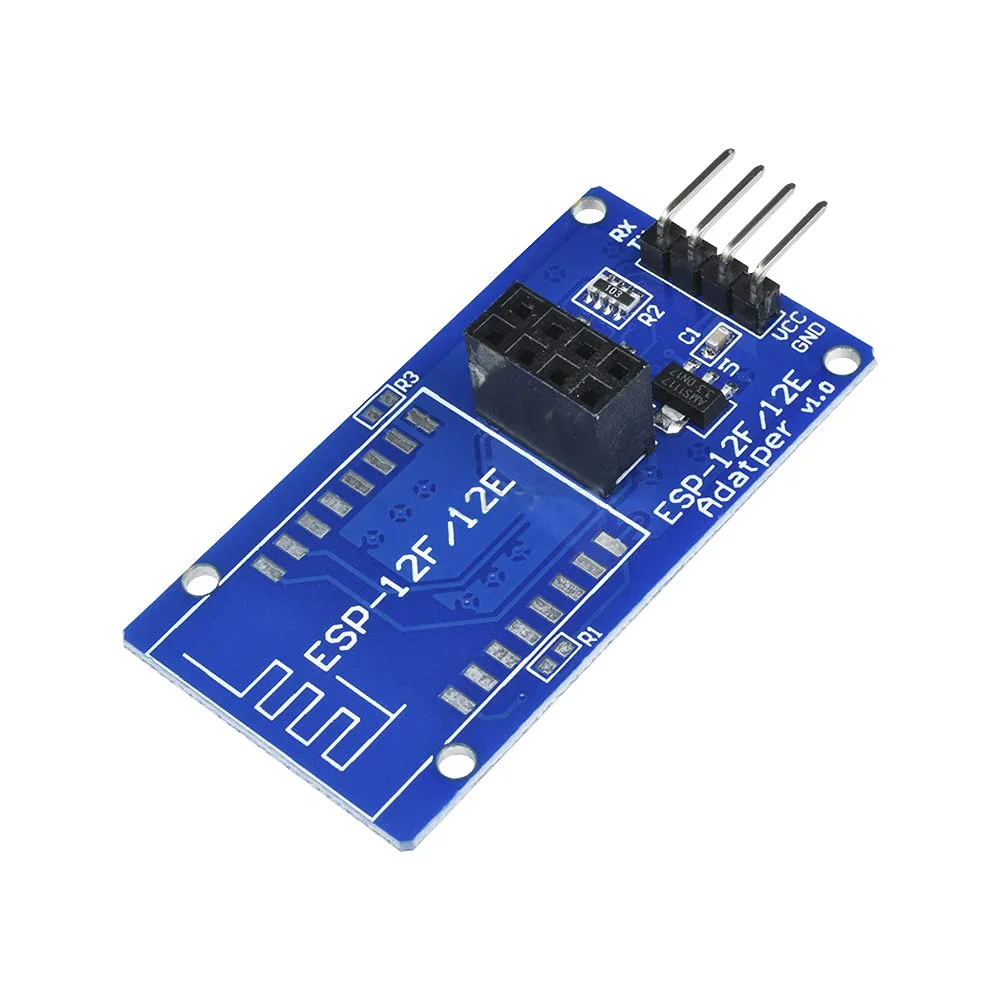
- ESP8266-12F: A higher-density SMD module from the same ecosystem that breaks out substantially more GPIO lines and ADC channels.
- ESP32-C3-01M: A pin-compatible modern alternative providing RISC-V computing power along with Wi-Fi and Bluetooth Low Energy support.
Package Includes:
- 1 x ESP8266-01S Serial WiFi Wireless Module


Reviews
No reviews yet. Be the first to share your experience!