
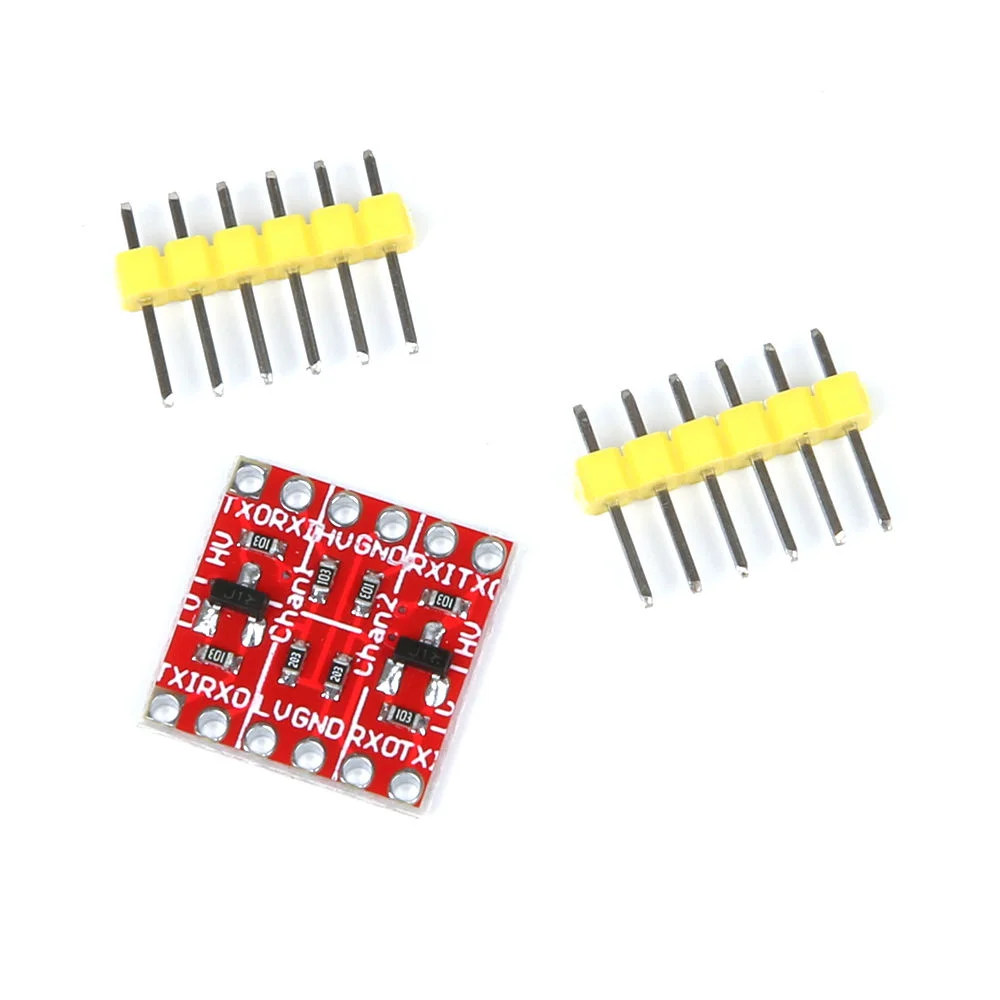
2-Channel Logic Level Converter 3.3V 5V TTL is a critical bridge for any electronic project that requires seamless communication between components operating at different voltage levels. Many modern microcontrollers like the ESP32 or Raspberry Pi use 3.3V logic, however, many legacy sensors and modules still require 5V signals. This bidirectional converter safely steps down 5V signals to 3.3V and steps up 3.3V to 5V simultaneously across two independent channels. Consequently, you can protect your sensitive low-voltage pins from overvoltage damage while maintaining high-speed data integrity. Therefore, this compact module is an indispensable tool for hobbyists and engineers working with mixed-voltage systems.
Key Features:
- Bidirectional Translation: Each of the two channels supports data flow in both directions, making it compatible with I2C, SPI, and asynchronous UART communication.
- High-Speed Switching: The MOSFET-based design allows for fast signal transitions, ensuring reliable data transfer even at high baud rates.
- Compact Footprint: Its small size makes it easy to integrate into tight PCB layouts or use on standard breadboards for prototyping.
- Multiple Channels: Two independent channels allow you to convert two signal lines simultaneously, such as the SDA and SCL lines of an I2C bus.
- Low Power Draw: The passive-style conversion circuit consumes negligible power during operation, preserving battery life in portable applications.
Technical Specifications:
- High Side Voltage (HV): 5 V maximum
- Low Side Voltage (LV): 3.3 V (standard) or down to 1.8 V
- Channels: 2 Bidirectional Channels
- Logic Compatibility: TTL Level
- Conversion Method: N-Channel MOSFET with 10 kΩ pull-up resistors
- Operating Temperature: −40°C to +85°C
Mechanical Specifications:
- Mounting: 0.1 inch (2.54 mm) pitch headers for easy breadboarding.
- PCB Material: High-quality FR-4 glass epoxy.
- Solder Pads: Pre-tinned for excellent solder wetting.
- Circuit Protection: Built-in pull-up resistors ensure stable signal states.
Dimensions:
- Width: ≈ 15.5 mm
- Length: ≈ 16.0 mm
- Height: ≈ 11.5 mm (including pin headers)
- Weight: ≈ 1.5 g
Pinout and Wiring:
- HV (High Voltage): Connect to the 5V power supply rail.
- LV (Low Voltage): Connect to the 3.3V power supply rail.
- GND (Ground): Connect to the common system ground. Both ground pins are usually connected on-board.
- HV1 / HV2: Input/Output pins for the 5V logic signals.
- LV1 / LV2: Input/Output pins for the 3.3V logic signals.
- Wiring Tip: Always ensure that the HV and LV power pins receive their respective voltages before sending signals through the data pins.
Datasheet Reference:
- Download Bi-directional Level Shifter Application Note/Datasheet
Commonly Used in:
- I2C Communication: Shifting SCL and SDA lines between 5V sensors and 3.3V microcontrollers.
- UART/Serial Links: Connecting 5V GPS modules or Bluetooth modules to 3.3V development boards.
- LCD Interfacing: Driving older 5V character displays from modern 3.3V logic chips.
Applications:
- Arduino-to-ESP32 Interfacing: Bridges the voltage gap between different microcontroller families.
- Sensor Protection: Prevents 5V signals from entering and damaging 3.3V GPIO pins.
- Signal Leveling: Ensures logic levels meet the minimum VIH (Voltage Input High) thresholds for various ICs.
Equivalent Models:
- BSS138 Level Shifter: A common single-channel or multi-channel equivalent using the same MOSFET topology.
- TXB0104 / TXB0108: Integrated circuit-based level shifters that offer more channels, furthermore, they provide automatic direction sensing.
- 4-Channel Logic Level Converter: A larger version of this module providing four paths instead of two.
Package Includes:
- 1 x 2-Channel Logic Level Converter 3.3V 5V TTL
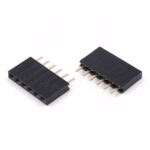
- 2 x 6-Pin Straight Male Headers


Reviews
No reviews yet. Be the first to share your experience!