
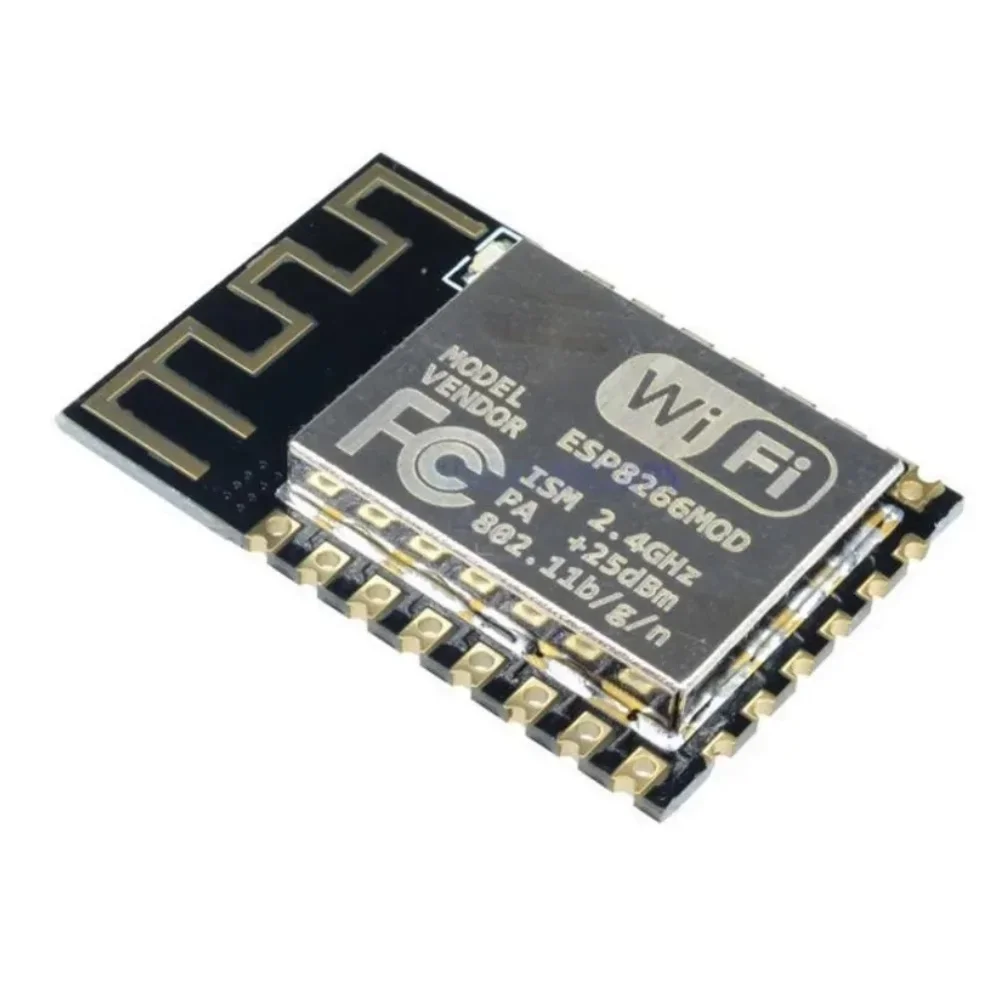
ESP-12F ESP8266 Wifi Wireless IoT Board Module
₹120.00
Frequently Bought Together
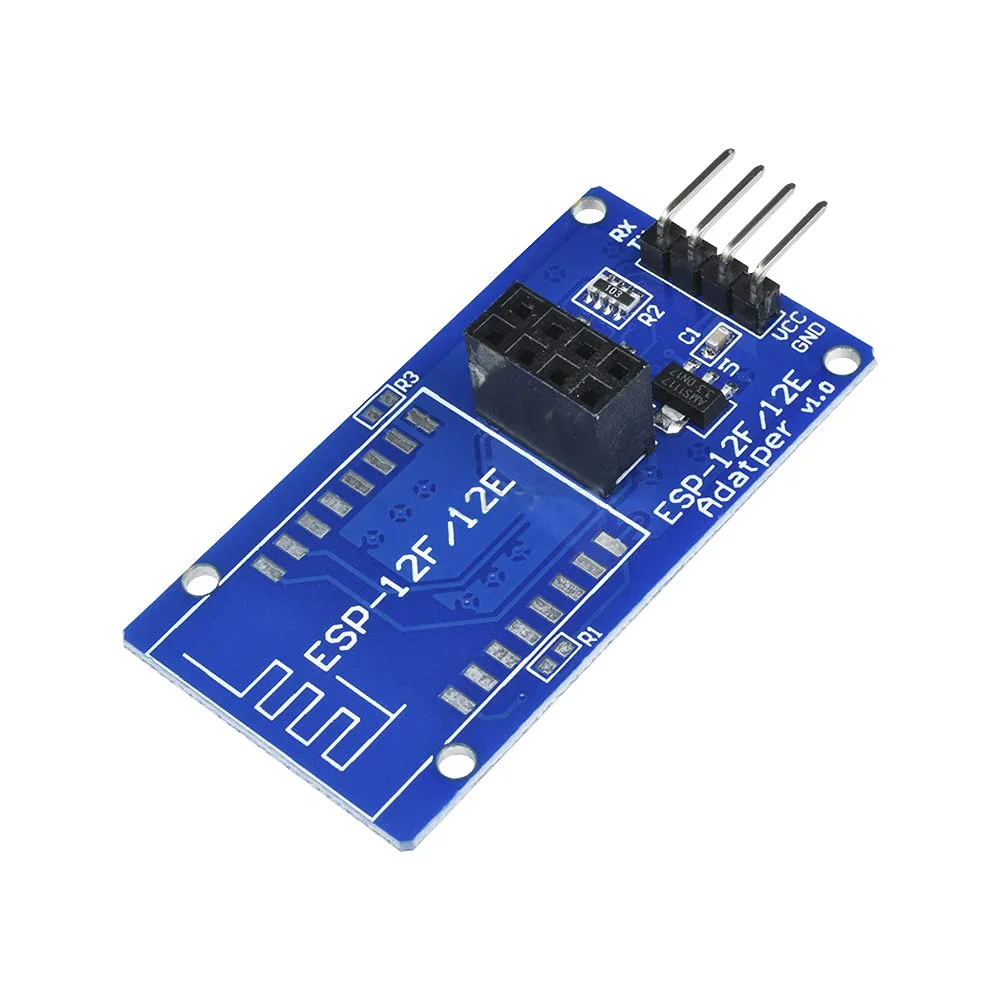

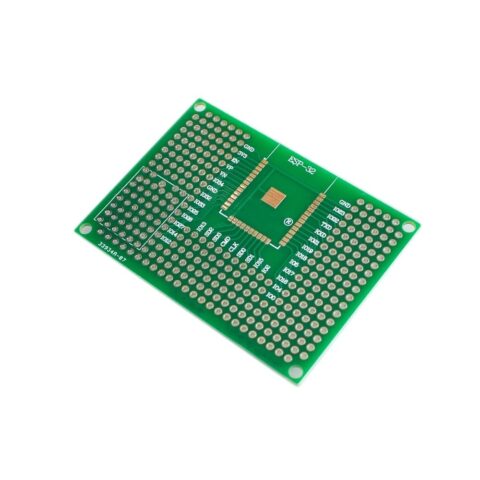
ESP-12F ESP8266 Wifi Wireless IoT Board Module is an enhanced version of the popular ESP-12 series, specifically designed to provide robust Wi-Fi connectivity for the Internet of Things (IoT). This module integrates the powerful ESP8266EX core, offering a complete and self-contained Wi-Fi networking solution that can either host applications or offload networking functions to another processor. Consequently, developers benefit from improved antenna performance and optimized PCB layouts compared to older revisions. Furthermore, the module features a generous 4MB flash memory, allowing for complex firmware and over-the-air (OTA) updates. Therefore, the ESP-12F stands as a premier choice for engineers seeking a reliable, low-cost, and FCC/CE certified wireless interface for modern smart devices.
Key Features:
- Advanced Antenna Design: The module utilizes an optimized PCB trace antenna that significantly improves signal range and stability compared to the ESP-12E.
- Integrated Flash Memory: It includes 4MB (32Mbit) of SPI flash, providing ample space for user code and data storage.
- Low Power Consumption: Supports multiple power-saving modes, including deep sleep, which draws as little as 20 μA.
- Onboard Certification: The metal shielding provides EMI protection and carries FCC, CE, and RoHS certifications for commercial deployment.
- Rich Peripheral Interface: Features a wide array of GPIOs, ADC, SPI, and UART interfaces for versatile hardware integration.
Technical Specifications:
- Wi-Fi Protocol: 802.11 b/g/n (2.4 GHz)
- Operating Voltage: 3.0 V to 3.6 V (Recommended 3.3 V)
- Operating Current: Average ≈ 80 mA (Peak ≈ 170 mA during transmission)
- Flash Memory Size: 4 MB (32 Mbit)
- Processor: Tensilica L106 32-bit RISC MCU (up to 160 MHz)
- Operating Temperature: −40°C to +125°C
- Logic Level: 3.3 V (Not 5 V tolerant)
Mechanical Specifications:
- Package Type: SMD-22 (Surface Mount Device)
- Shielding: Integrated metal casing for noise reduction
- Mounting Style: Castellated holes for easy PCB soldering
- Antenna Type: On-board PCB trace antenna
Dimensions:
- Length: 24.0 mm
- Width: 16.0 mm
- Thickness: ≈ 3.0 mm
- Pin Pitch: 2.0 mm
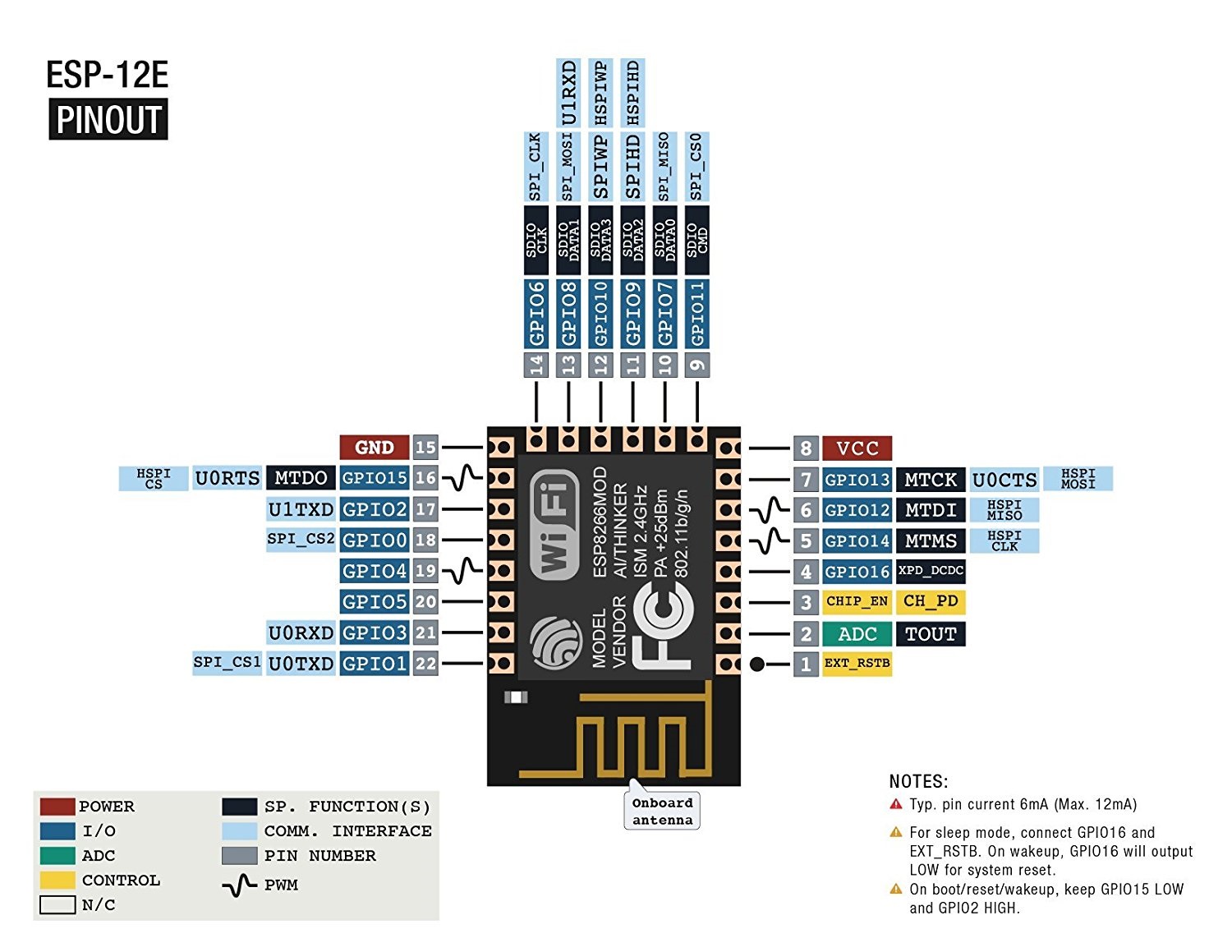
Pinout and Wiring:
- VCC: Connect to a stable 3.3 V power source.
- GND: Connect to the common system ground.
- EN (CH_PD): Chip Enable pin. However, you must pull this pin high to 3.3 V for the module to function.
- GPIO15: Boot configuration pin. Connect to ground (GND) via a 10k Ω resistor for normal operation.
- GPIO0: Flash mode pin. Pull this low during power-up to enter programming mode.
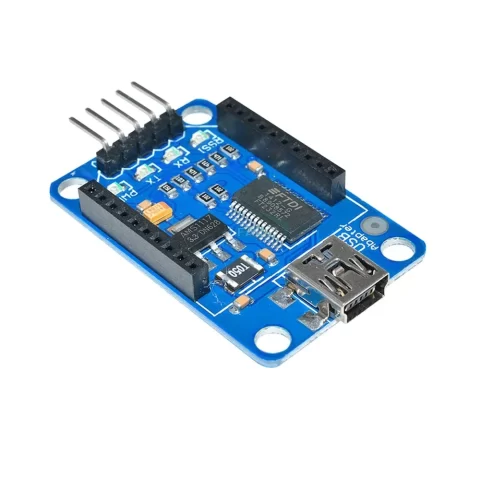
- TXD/RXD: Connect to your USB-to-Serial adapter for firmware uploading and debugging.
Datasheet Reference:
Commonly Used in:
- Smart Home Hubs: Acts as the primary wireless bridge for light switches, plugs, and sensors.
- Development Boards: Forms the core component of NodeMCU and Wemos D1 Mini boards.
- Industrial Monitoring: Facilitates remote data logging and sensor reporting via MQTT or HTTP.
Applications:
- Wireless Sensor Networks: Creating mesh or star topologies for environmental tracking.
- Home Automation: Controlling AC loads or DC motors through web-based interfaces.
- IP Cameras: Transmitting low-resolution data or status information over Wi-Fi.
- Remote Metering: Modernizing traditional utility meters with wireless reading capabilities.
Equivalent Models:
- ESP-12E: The predecessor to the 12F, featuring a slightly different antenna layout but similar pinout.
- ESP-07: A similar module that includes an external U.FL connector for high-gain antennas.
- ESP-WROOM-02: The official Microchip-produced version of the ESP8266 module with high reliability.
Package Includes:
- 1 x ESP-12F ESP8266 Wifi Wireless IoT Board Module
Additional information
| Weight | 3 g |
|---|---|
| Dimensions | 25 × 17 × 3.5 mm |

Reviews
There are no reviews yet.